
In France, sub-prefectures are located in the capitals of special districts. These districts do not have their own prefectures. There are 234 sub-prefectures for a total of 333 districts. The remaining 99 districts are managed by prefectures.
Therefore, not all departments have the same system. For example, Val-d'Oise (Cergy) and Mayotte (Mamoudzou) do not have a district managed by their prefecture.
The list shows all the sub-prefectures by department. It provides a good idea of local administrative areas. One can see the decentralized state services and local administrations.
Introduction
Sub-prefectures are very important in France. They help better organize the territory. They are the capitals of the districts and also provide information about sub-prefecture opening hours.
These local offices support the work of the state. They operate close to the people, under the control of the departmental prefect.
Definition of a Sub-Prefecture
A sub-prefecture is the capital of a district. It is an important point in managing the territory. Sub-prefectures assist the state in implementing its local missions.
History of Territorial Administrative Organization
The establishment of sub-prefectures has changed over time. In 1926, many were abolished. New ones were created. However, the distribution was not always fair, according to a report from the Court of Auditors in 2012.
Tests to reduce the number of districts and sub-prefectures took place in Alsace and Lorraine. In 2017, a new report discussed these issues. It sought to understand the role of sub-prefectures in the territories.
Geographical Distribution
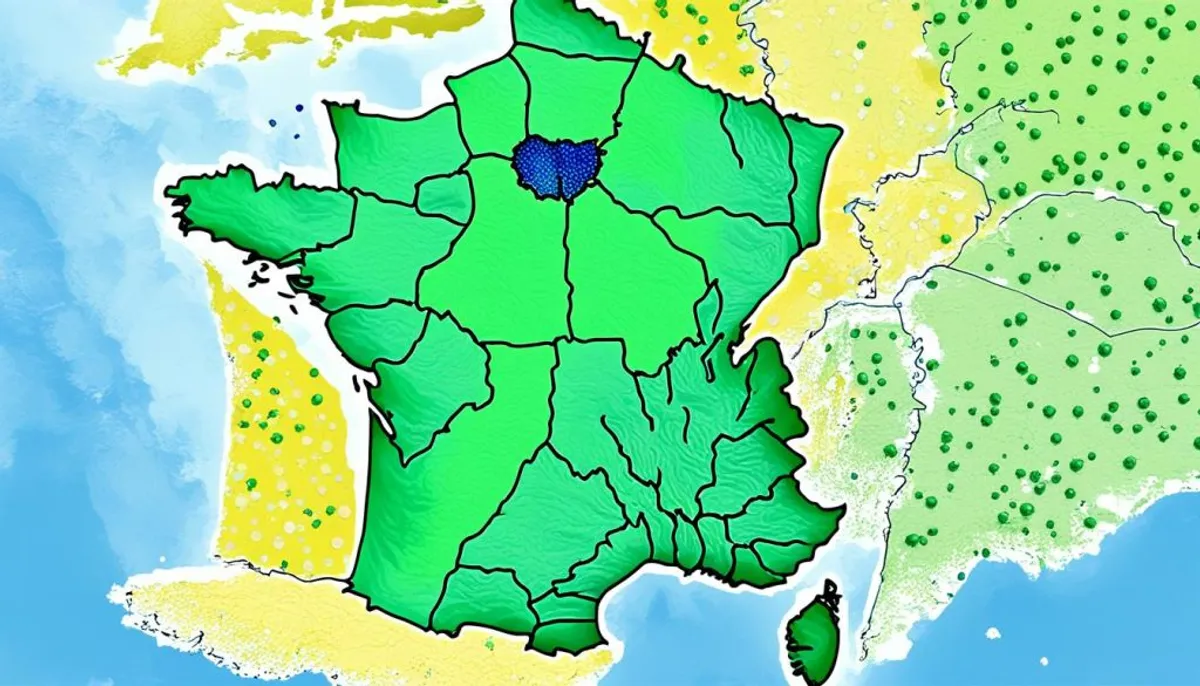
In France, the geographical distribution of sub-prefectures is well thought out. They are placed everywhere, whether in the mainland or in the overseas territories. This greatly helps in local administrative organization.
In the Mainland
In the mainland, most of the sub-prefectures are located. There are 234 found in the 96 departments. This shows that the state wants to be close everywhere. The goal is to be present to help the people.
Overseas
Sub-prefectures also exist in the overseas communities, but fewer. This maintains a decentralized administrative organization throughout France. The prefectural subdivisions assist in land development and support local development.
Administrative Particularities
In the regions of France, some prefectures are special. They are located on the border of two small departments. For example, Avignon, Nanterre, and Strasbourg are border prefectures. Their location poses challenges for administrative management, especially for departmental boundaries and the prefectural network. Additionally, one can find gourmet restaurants in Nanterre that enrich the culinary experience of the region.
Border Prefectures
When a prefecture is close to two regions, it is not simple. Public services must work well together. Otherwise, important matters for the people of both regions may become confusing. These places are called border prefectures.
Atypical Districts
There are also special regions in the French departments. These areas can differ in populations, locations, or economy. This requires special management of the territorial administrative organization. Why? To adjust to the needs of these atypical districts.
List of Sub-Prefectures
France has 234 sub-prefectures throughout its territory, including overseas regions. This list shows all the sub-prefectures, by department for France and by region for the overseas territories.
By Department
The sub-prefectures show how France is organized locally. Each department has its list of sub-prefectures. Here are all the cities for each location.
| Department | Sub-Prefectures |
|---|---|
| Ain | Belley, Gex |
| Aisne | Château-Thierry, Saint-Quentin, Soissons |
| Allier | Montluçon, Vichy |
| Alpes-de-Haute-Provence | Castellane, Forcalquier |
| Hautes-Alpes | Briançon, Gap |
| Alpes-Maritimes | Grasse, Nice |
| Ardèche | Largentière, Privas |
| Ardennes | Charleville-Mézières, Rethel, Sedan |
| Ariège | Foix, Pamiers |
| Aube | Bar-sur-Aube, Nogent-sur-Seine, Troyes |
| Aude | Carcassonne, Limoux, Narbonne |
| Aveyron | Espalion, Millau, Villefranche-de-Rouergue |
| Bouches-du-Rhône | Aix-en-Provence, Arles |
| Calvados | Bayeux, Lisieux, Vire |
| Cantal | Aurillac, Saint-Flour |
| Charente | Angoulême, Cognac, Confolens |
| Charente-Maritime | La Rochelle, Rochefort, Saintes |
| Cher | Bourges, Saint-Amand-Montrond |
| Corrèze | Brive-la-Gaillarde, Tulle |
| Corse-du-Sud | Ajaccio |
| Haute-Corse | – |
| Côte-d’Or | Beaune, Châtillon-sur-Seine, Montbard |
| Côtes-d’Armor | Dinan, Lannion, Loudéac |
| Creuse | Aubusson, Guéret |
| Dordogne | Bergerac, Nontron, Sarlat-la-Canéda |
| Doubs | Besançon, Montbéliard |
| Drôme | Die, Nyons, Valence |
| Eure | Évreux, Les Andelys, Louviers |
| Eure-et-Loir | Châteaudun, Dreux, Nogent-le-Rotrou |
| Finistère | Brest, Châteaulin, Morlaix |
| Gard | Alès, Le Vigan, Nîmes |
| Haute-Garonne | Muret, Saint-Gaudens, Toulouse |
| Gers | Condom, Mirande |
| Gironde | Arcachon, Blaye, Langon, Libourne |
| Hérault | Béziers, Lodève, Montpellier |
| Ille-et-Vilaine | Fougères, Redon, Saint-Malo |
| Indre | Châteauroux, La Châtre |
| Indre-et-Loire | Chinon, Loches, Tours |
| Isère | Grenoble, La Tour-du-Pin, Vienne |
| Jura | Dole, Lons-le-Saunier |
| Landes | Dax, Mont-de-Marsan |
| Loir-et-Cher | Blois, Romorantin-Lanthenay, Vendôme |
| Loire | Montbrison, Roanne, Saint-Étienne |
| Haute-Loire | Brioude, Le Puy-en-Velay |
| Loire-Atlantique | Ancenis, Châteaubriant, Saint-Nazaire |
| Loiret | Montargis, Pithiviers |
| Lot | Figeac, Gourdon |
| Lot-et-Garonne | Agen, Marmande, Nérac |
| Lozère | Florac, Mende |
| Maine-et-Loire | Angers, Cholet, Saumur |
| Manche | Cherbourg-en-Cotentin, Coutances, Valognes |
| Marne | Épernay, Reims, Vitry-le-François |
| Haute-Marne | – |
| Mayenne | Château-Gontier, Laval, Mayenne |
| Meurthe-et-Moselle | Briey, Lunéville, Nancy |
| Meuse | Bar-le-Duc, Commercy, Verdun |
| Morbihan | Lorient, Pontivy, Vannes |
| Moselle | Forbach, Sarreguemines, Thionville |
| Nièvre | Château-Chinon, Clamecy, Cosne-Cours-sur-Loire |
| Nord | Avesnes-sur-Helpe, Douai, Dunkerque, Valenciennes |
| Oise | Beauvais, Compiègne, Senlis |
| Orne | Alençon, Argentan, Mortagne-au-Perche |
| Pas-de-Calais | Arras, Béthune, Boulogne-sur-Mer, Calais, Montreuil-sur-Mer |
| Puy-de-Dôme | Ambert, Issoire, Riom, Thiers |
| Pyrénées-Atlantiques | Bayonne, Oloron-Sainte-Marie, Pau |
| Hautes-Pyrénées | Argelès-Gazost, Bagnères-de-Bigorre, Tarbes |
| Pyrénées-Orientales | Céret, Prades |
| Bas-Rhin | Haguenau, Molsheim, Saverne, Sélestat, Wissembourg |
| Haut-Rhin | Altkirch, Colmar, Guebwiller, Mulhouse, Ribeauvillé |
| Rhône | Villefranche-sur-Saône |
| Haute-Saône | Gray, Lure, Vesoul |
| Saône-et-Loire | Autun, Chalon-sur-Saône, Louhans, Mâcon |
| Sarthe | La Flèche, Le Mans |
| Savoie | Albertville, Chambéry |
| Haute-Savoie | Annecy, Bonneville, Saint-Julien-en-Genevois, Thonon-les-Bains |
| Paris | – |
| Seine-Maritime | Dieppe, Le Havre, Rouen |
| Seine-et-Marne | Fontainebleau, Meaux, Provins |
| Yvelines | Mantes-la-Jolie, Rambouillet, Saint-Germain-en-Laye |
| Deux-Sèvres | Bressuire, Niort |
| Somme | Abbeville, Amiens |
| Tarn | Albi, Castres |
| Tarn-et-Garonne | Castelsarrasin, Moissac, Montauban |
| Var | Draguignan, Toulon |
| Vaucluse | Apt, Avignon |
| Vendée | La Roche-sur-Yon, Les Sables-d'Olonne |
| Vienne | Châtellerault, Montmorillon, Poitiers |
| Haute-Vienne | Bellac, Limoges |
| Vosges | Épinal, Neufchâteau, Saint-Dié-des-Vosges |
| Yonne | Auxerre, Avallon, Sens |
| Territoire de Belfort | Belfort |
| Essonne | Évry, Palaiseau, Étampes |
| Hauts-de-Seine | Antony, Boulogne-Billancourt, Nanterre |
| Seine-Saint-Denis | Bobigny, Le Raincy, Saint-Denis |
| Val-de-Marne | Créteil, L'Haÿ-les-Roses |
| Val-d'Oise | Argenteuil, Pontoise, Sarcelles |
Overseas Regions
Evolution and Recent Changes
The organization of sub-prefectures has changed significantly. These recent changes include developments with reforms. The latter adapt the territorial network to the needs of French society.
Merging Communities
In 1926, a major reform took place. It abolished 108 sub-prefectures and created 2 new ones. This reduced the number of sub-prefectures by 106. In 2013, Alsace and Lorraine tested an idea to further reduce districts and sub-prefectures.
Creation of New Districts
Despite these reforms, in France, the number of districts has not decreased much. In 2022, Emmanuel Macron announced the reinstatement of five sub-prefectures. They had been merged in 2008. He also announced the creation of a new sub-prefecture in Saint-Georges-de-l'Oyapock.
These decisions show a concern for local needs. They aim to maintain the state's presence throughout France. This enhances the role of sub-prefects and improves administrative organization.
| Indicator | Value |
|---|---|
| Current number of sub-prefectures in France | 234 |
| Decrease in the number of sub-prefectures in 1926 | 106 |
| Average cost per inhabitant of sub-prefectures in Île-de-France | 1,764 euros |
| Average cost per inhabitant of sub-prefectures in Corsica | 260 euros |
| Potential increase in expenses through mutualization | More than 50 million euros per year |

Particular Cases
In many cases, sub-prefectures in France are well positioned within the department. However, some have a special location, or they have changed recently. These decentralized sub-prefectures show that the French territory is varied. It can change over time.
Decentralized Sub-Prefectures
There are sub-prefectures located at the edge of the department, or even of several departments. Avignon, Nanterre, and Strasbourg are examples of this. Their positions lead to administrative changes and specific territorial reforms, particularly regarding the role of the prefect.
Changes in Administrative Order
Speaking of changes, some sub-prefectures have recently been merged. This was the case in Corsica and Alsace. These mergers led to new administrations or different statuses. This reflects the ongoing evolution of the administrative network.
| Sub-Prefecture | Department | Characteristics |
|---|---|---|
| Avignon | Vaucluse | Border sub-prefecture with Gard |
| Nanterre | Hauts-de-Seine | Border sub-prefecture of Val-d'Oise and Yvelines |
| Strasbourg | Bas-Rhin | Sub-prefecture separated from Germany by the Rhine |
| Ajaccio | Corse-du-Sud | Sub-prefecture that became the capital of the Territorial Collectivity of Corsica |
| Colmar | Haut-Rhin | Sub-prefecture maintained within the framework of the European Collectivity of Alsace |
Conclusion
Thus, the French sub-prefectures are an important network. They are found throughout France, including overseas regions. Even though some sub-prefectures have closed, this network is crucial for France.
The recruitment criteria for sub-prefects change over time. This shows that the system adapts. Even with site closures, sub-prefectures remain close to the people. They also help represent the state locally.
We will see what happens with this network later. There are constant changes, such as staff reductions and site closures. These adjustments are made to better serve everywhere in France.