
A prefect is like the Prime Minister in a department. He establishes the rules of the government there. He ensures that everyone follows these rules. The prefect is also responsible for security and protecting the people.
Prefects have an important job; it was Napoleon who created them in 1800. Before 1982, they were the leaders and represented the State in the department. After 1982, the law changed. Now, other local elected officials handle the executive.
Definition and Role of the Prefect
The word "prefect" comes from the Latin praefectus, which means "placed in charge." He is a high-ranking official leading a region or department. Today, prefects represent the State in the regions and departments.
The word "sub-prefect" also comes from Latin. It is a delegate of the prefect in a district. All are appointed by the President of the Republic.
Representative of the State in the Department
The prefect is the representative of the State in a department. His role is to enforce national laws on site.
He guarantees security and public order in his area of action.
Head of Decentralized State Services
In addition, the prefect is the head of decentralized State services. He directs services such as the police or customs present in the department. His job includes enforcing laws locally.

What is a Prefect and Its Responsibilities
The prefect represents the State in a department. He manages the executive of the Government. He enforces national and community policies on site.
Guardian of Public Order and Security
The prefect ensures public order and security. He manages situations such as protests. He has authority over police officers and gendarmes to maintain order.
He plans protection against natural disasters and other risks. He also coordinates the actions of firefighters when needed.
Control of Local Authorities
The prefect ensures the proper application of laws by local authorities. He checks that prefectural orders are properly followed. He also ensures that the actions of elected officials comply with the laws.
The prefect guides and advises local elected officials. This helps strengthen the link between the State and the territories.
Prefectoral Body and Organization
A prefect is a very important person. He is chosen from the students of the ENA and others. The President of the Republic appoints him, upon the proposal of the Prime Minister and the Minister of the Interior.
Prefectural Hierarchy
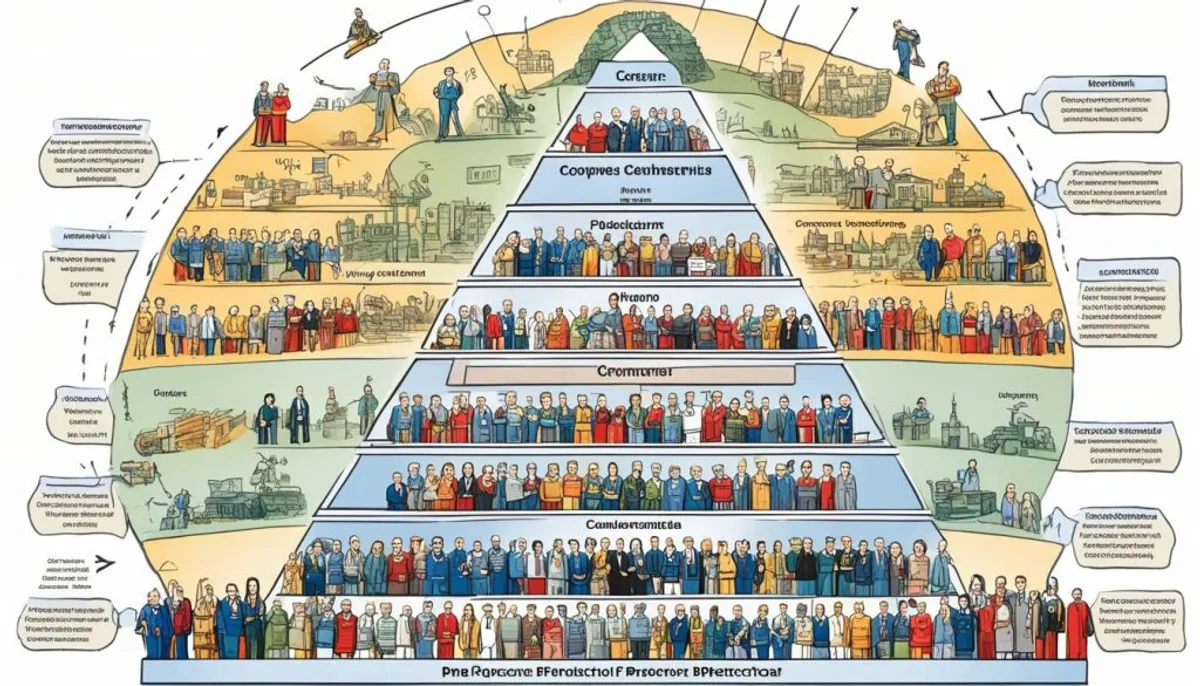
Prefects generally stay three years in their workplace. There are 125 prefects and 456 sub-prefects in France. The latter assist the prefects in their work. The number of prefectures plays a crucial role in the administrative organization of the country.
Feminization of the Position
More and more women are becoming prefects. Today, about a hundred women hold this position. Among them, 15 are prefects. This represents 12% of the prefectural body.
Prefect's Missions
The prefect is important for the department. He helps create jobs. The prefect also supports businesses and helps people find housing. He takes care of those who need assistance.
Management of Disasters and Major Risks
The prefect works to protect residents from dangers. He plans for natural disasters and technological risks, taking into account the decentralization in Cameroon. He is the head of rescue operations and manages firefighters. This helps save lives and protect homes.
Mediation and Advice to Elected Officials
The prefect assists when there is a dispute. He talks with city leaders to find solutions. The prefect ensures that laws are properly enforced in all cities.
Conclusion
In summary, the prefect helps to operate the State in a department or region. He maintains security and ensures that laws are enforced. They also support the economy and manage emergency situations.
Prefects, along with sub-prefects, are chosen by the President of the Republic. This shows that they are very important in local government.
The role of the prefect has changed over time. In the 19th century, it was mainly political. Now, in the 20th century, it is more about administration.
This change shows how the State and local communities work together. They seek balance without overly centralizing power. This is to prevent the State from becoming less powerful.
Thus, the prefect represents the State locally. He helps implement national policies and keep the regions united.