
Between 2011 and 2014, there were changes in the territorial administration of Côte d'Ivoire. Today, the country has two autonomous districts and twelve districts. They are divided into thirty-one regions. The Autonomous District of Abidjan includes the sub-prefecture of Abidjan. This sub-prefecture is divided into urban Abidjan, North Abidjan, South Abidjan, and rural Abidjan (Abidjan Rural East, Abidjan Rural West).
The sub-prefecture of Abidjan is an important place. It is part of the economic capital of Côte d'Ivoire.
Main Points to Remember
- The sub-prefecture of Abidjan is in the Autonomous District of Abidjan. It is essential as an administrative subdivision.
- It is divided into several parts: urban Abidjan, North Abidjan, South Abidjan, and rural Abidjan.
- Abidjan is a key city in Côte d'Ivoire, the economic capital, and the most populous in French-speaking West Africa.
- The sub-prefecture of Abidjan is central to the administration and progress of the Ivorian economic capital.
- The reforms from 2011 to 2014 improved local governance and the quality of services in the sub-prefecture of Abidjan.
Introduction
Côte d'Ivoire is divided into 31 regions, 111 departments, and 509 sub-prefectures. Abidjan, a sub-prefecture, is in the Autonomous District of Abidjan.
This district is very important for Côte d'Ivoire. It greatly assists in the development of Abidjan, the economic capital of the country.
Overview of the Sub-Prefecture of Abidjan
The sub-prefecture of Abidjan is very important for leading the Ivorian economic capital. It is under the authority of a sub-prefect. The latter is a representative of the state at the local level.
Definition of a Sub-Prefecture
A sub-prefecture is a local administrative division. Its main role is to implement public policies. It also manages state services in its area.
In Abidjan, the sub-prefecture manages the affairs of the economic capital of Côte d'Ivoire.
Role and Functions of a Sub-Prefecture
Sub-prefectures handle public order. They also ensure the enforcement of laws and the coordination of public services.
In the case of Abidjan, these missions are crucial for the management of the city.
Geographical Situation of the Sub-Prefecture of Abidjan
The sub-prefecture of Abidjan is located in the south of Côte d'Ivoire. More specifically, in the Autonomous District of Abidjan. This is where the city of Abidjan lies, the economic heart of the country. This area covers a territory of 2,119 km² and stretches from the Atlantic Ocean in the west to the Ébrié lagoon in the east.
| Geographical Data | Values |
|---|---|
| Area of the Sub-Prefecture of Abidjan | 2,119 km² |
| Geographical Location | In the south of Côte d'Ivoire, in the Autonomous District of Abidjan |
| Geographical Boundaries | Bordered by the Atlantic Ocean to the west and the Ébrié lagoon to the east |
| Minimum Altitude | 10 meters |
| Maximum Altitude | 10 meters |
| Average Annual Rainfall | Over 1,500 mm |
| Number of Rainy Days per Year | 131.6 days |
Administrative Division of the Sub-Prefecture of Abidjan
The sub-prefecture of Abidjan has six parts: urban Abidjan, North Abidjan, South Abidjan, rural Abidjan, Abidjan Rural East, and Abidjan Rural West. Each contributes to the development of the country's economic capital.
Urban Abidjan
Urban Abidjan covers the most populated and active neighborhoods of the capital. It is crucial for the city's progress.
North Abidjan
North Abidjan is further north, with fewer people than in the center. It handles local laws and government services for this sector.
South Abidjan
South Abidjan extends southward, including residential and industrial areas. It manages local affairs in its part of Abidjan.
Rural Abidjan
Rural Abidjan includes the regions of Abidjan Rural East and West. These less populated areas are essential for rural development projects.
Each part of Abidjan has its own governors and local government services. They help manage laws and policies throughout the city more effectively.
History of the Sub-Prefecture of Abidjan
Between 2011 and 2014, the sub-prefecture of Abidjan was established through administrative changes. Previously, Abidjan was a city with several autonomous municipalities. Each managed its own affairs. However, with the creation of sub-prefectures, the aim was to improve management and public services.
These reforms helped unify a city that was previously very fragmented. They allowed for better coordination of services and more efficient management of the economic capital, including the sub-prefecture of Yopougon. These measures were taken to improve the way the city is administered.
Since the establishment of the sub-prefecture of Abidjan, local leaders can better respond to the needs of the city. This change in organization has strengthened the importance of Abidjan as a hub in Côte d'Ivoire. Today, this new administrative organization has positively transformed Abidjan.
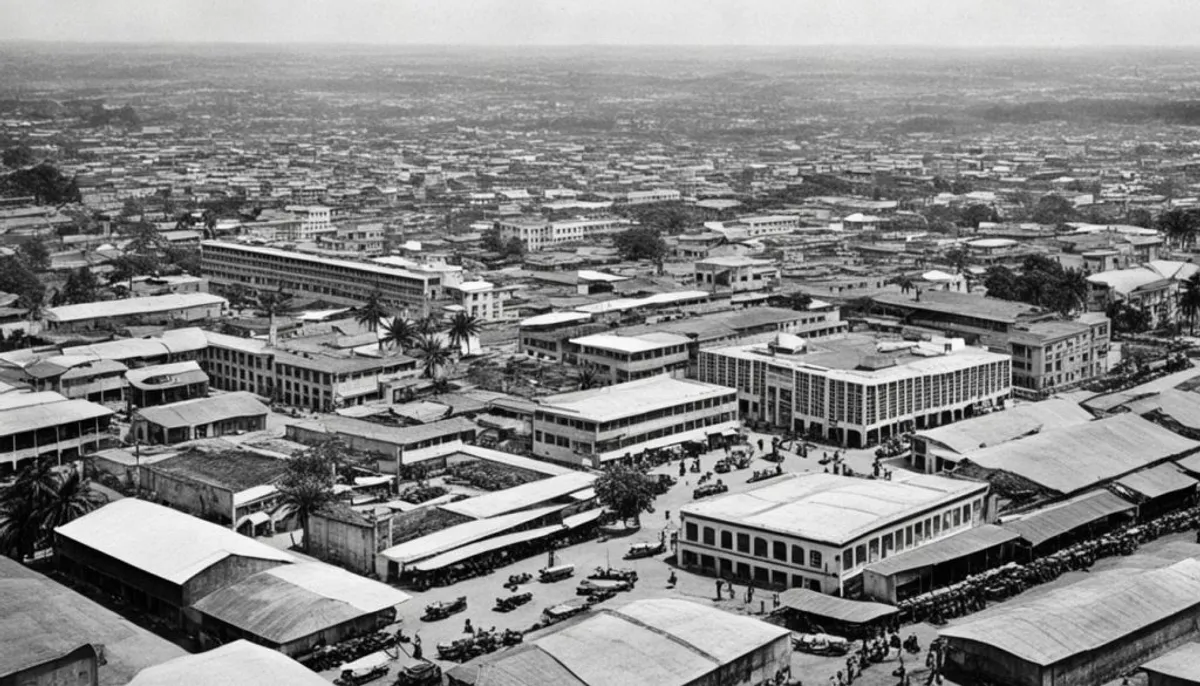
What is the Sub-Prefecture of Abidjan?
The sub-prefecture of Abidjan has several sub-prefectures. They are part of the main economic city of Côte d'Ivoire. Each is managed by a sub-prefect. They help enforce laws and maintain order in their region.
Sub-Prefectures of the Municipality of Abidjan
Anyama, Brofodoumé, Kouakro, and several others depend on Abidjan. There are a total of twenty-four sub-prefectures. Each has its own sub-prefect, responsible for overseeing the area and enforcing the laws.
Role and Responsibilities of Sub-Prefects
The sub-prefects of Abidjan enforce public policies. They coordinate local state services. And they ensure security in their area. The sub-prefects are the intermediaries between the government and the residents. They help manage the city effectively.
Demographics of the Sub-Prefecture of Abidjan
The 2014 census showed that the sub-prefecture of Abidjan has 4,707,404 inhabitants. The urban area, with the most populated municipalities, houses 4,395,243 people. North Abidjan has 1,204,610 inhabitants, and South Abidjan has 1,071,543.
The rural areas of Abidjan have 312,161 residents. With this high population density, Abidjan is the largest city in Côte d'Ivoire.
| Territory | Population |
|---|---|
| Urban Abidjan | 4,395,243 |
| North Abidjan | 1,204,610 |
| South Abidjan | 1,071,543 |
| Rural Areas of Abidjan | 312,161 |
| Total | 4,707,404 |
The demographics highlight the key role of Abidjan as the economic capital of the country. Nearly 21.5% of the entire country's population lives here.
Economy of the Sub-Prefecture of Abidjan
Abidjan is the economic capital of Côte d'Ivoire. Many key activities are found here, such as trade and services. Banking and agri-food companies have their headquarters here.
Key Economic Sectors
This city is essential for the Ivorian economy. Trade, services, and finance are very important here. Abidjan is also a major port center, thanks to the port of Abidjan.
Major Companies and Industries
Many large companies, both Ivorian and international, are based here. Industries such as finance and automotive are present. The largest companies in the region are headquartered in Abidjan.
Administration and Public Services
In Abidjan, the sub-prefecture oversees local administration. It is assisted by district municipalities that handle local affairs. These ensure local management in every part of the city. Additionally, decentralized state services like the prefecture and other regional departments provide essential public services.
The goal is simple: to bring public services closer to the residents, including facilitating an online passport pre-application process. Thus, public policies are better implemented in this economic capital.
District Municipalities
The district municipalities in Abidjan are very important. They manage affairs close to citizens, providing local services. This helps improve people's daily lives by adapting to their specific needs.
Decentralized State Services
Higher up in the hierarchy, the decentralized state services are in action. In the sub-prefecture of Abidjan, these agencies ensure the smooth implementation of public policies. The prefecture, the sub-prefecture, and other regional entities are at the forefront of providing the public services that residents need.

Education in the Sub-Prefecture of Abidjan
Abidjan, the economic capital of Côte d'Ivoire, has an excellent educational system. There are schools at all levels, from primary school to university. These educational institutions, whether public or private, as well as renowned universities and grande écoles, offer quality education.
Educational Institutions
Regarding primary and secondary education, there is a wide choice of schools. Notable mentions include EPP Alepe 1 and 2, EPP Fed, EPP Municipal, Groupe Scolaire Christ Roi, Lycée Moderne Alepe, and many others. This variety helps the youth in the region to get educated.
Universities and Grande Écoles
For higher education, Abidjan has its own prestigious universities and grande écoles. This includes Université Félix Houphouët-Boigny and other renowned institutions. These schools train the next generation of leaders and support economic growth.
| Literacy Rate | Percentage |
|---|---|
| Primary | 95% |
| Secondary | 20% |
| Higher | 24% |
| Enrollment Rate | Percentage |
|---|---|
| Primary | 85% of graduates |
| Secondary | 48.2% of graduates |
A budget of 30 billion FCFA is allocated for education in Abidjan. These funds demonstrate the authorities' commitment to education. They help develop the educational system, thus providing better opportunities for the youth.
Culture and Heritage
The sub-prefecture of Abidjan is rich in cultural heritage and tourist sites. These attractions contribute to the international reputation of the Ivorian metropolis. Notable places include the Palais de la Culture, the Museum of Civilizations, the Saint Paul Cathedral, and the Banco Park.
Abidjan also hosts significant major events and festivals throughout the year. Among these events are the famous Abidjan Arts and Culture Festival (FACIA), the Abidjan Cinematographic Days (JCA), and the Abidjan Carnival. These festivities celebrate and highlight the city's heritage and cultural identity.
Challenges and Issues Facing the Sub-Prefecture of Abidjan
The sub-prefecture of Abidjan is vibrant, but it faces significant challenges. Issues such as rapid urbanization, transportation management, and housing make life more difficult. Among the difficulties, the rapid population growth, inequalities, and concerns for infrastructure remain prominent.
It is important for local authorities to work hard. Their goal: to overcome these challenges for a better and sustainable future for Abidjan.
Abidjan is highly populated. With over 41,114 inhabitants per km², living in the city can be challenging. It is often complex to find housing, transportation, and public services for everyone.
Moreover, this rapid urbanization can harm the environment. Street trees sometimes disappear to make way for informal businesses. This can disrupt the city's natural balance. Agricultural land surrounding the city is also threatened by the lack of space.
To overcome these challenges, the authorities of Abidjan should consider effective plans. They could address urbanization, improve infrastructure, and protect the environment. Strong action is essential for a sustainable future for Abidjan.
Conclusion
The sub-prefecture of Abidjan is very important for Côte d'Ivoire. It is a key point in the management and progress of the economic capital. It hosts many people and businesses. A significant part of the country's life takes place here.
Abidjan has over 6 million inhabitants. It represents a large percentage of the total population of the country. Furthermore, it contributes significantly to the economy of Côte d'Ivoire.
Despite challenges such as the rapid growth of the city, traffic, and access to services, Abidjan remains vital for the country. In fact, it is a major center for making important decisions. It is also a place where the economy and culture of the country thrive.
Abidjan is very ambitious. It is the largest French-speaking city in West Africa. It is recognized for its architecture, tourist destinations, and cultural celebrations. All of this makes it famous, both nationally and internationally.
In conclusion, the sub-prefecture of Abidjan is essential for Côte d'Ivoire. Its impact on the economy and development of the country is immense. It plays a key role in urban planning and the future of Côte d'Ivoire.
FAQ
What is the Sub-Prefecture of Abidjan?
The sub-prefecture of Abidjan is a local part of Côte d'Ivoire. It is in the Autonomous District of Abidjan. It is a key place for government and progress in Abidjan.
What is the role and functions of a sub-prefecture?
A sub-prefecture is a piece of land that has its own authority led by a sub-prefect. It implements and organizes the laws of the country. It also coordinates local state services.
What is the geographical situation of the Sub-Prefecture of Abidjan?
The sub-prefecture of Abidjan measures 2,119 km². It encompasses all of Abidjan, which is in the south of Côte d'Ivoire. To the west, it borders the Atlantic Ocean. To the east, it extends to the Ébrié lagoon.
How is the Sub-Prefecture of Abidjan administratively divided?
The sub-prefecture of Abidjan is divided into six parts. Each part has its own name. For example, there is North Abidjan and South Abidjan.
What is the history of the Sub-Prefecture of Abidjan?
The sub-prefecture of Abidjan began between 2011 and 2014. This was after changes in governance. Previously, Abidjan had several small municipalities.
What are the sub-prefectures that make up the municipality of Abidjan?
In Abidjan, there are several small places. For example, you find Anyama and Brofodoumé. Each place has its own local leaders.
What is the demographics of the Sub-Prefecture of Abidjan?
In 2014, 4,707,404 people lived in the Sub-Prefecture of Abidjan. This makes it the most populated area in the country.
What are the main economic sectors of the Sub-Prefecture of Abidjan?
People engage in a lot of trade and services in Abidjan. There are also banks, factories, and a lot of tourism. It is an important place for business and maritime transport.
How is the administration and public services organized in the Sub-Prefecture of Abidjan?
Abidjan has its own municipalities and regional government services. All of this serves to ensure that government laws are applied locally, including the conditions for becoming a prefect.
What is the educational offer in the Sub-Prefecture of Abidjan?
Abidjan has many schools and even famous universities. There are plenty of places where children and young people can learn.
What are the main cultural and tourist sites in the Sub-Prefecture of Abidjan?
There is much to see in Abidjan, such as the Palace of Culture. There are also museums and ancient churches. And don't miss the Banco Park. The city also hosts festivals all year round.
What are the challenges and issues facing the Sub-Prefecture of Abidjan?
Abidjan faces real challenges, such as too many people moving into the city. This causes problems with housing, transportation, and public services. The environment also suffers from this growth.