
A prefect assists the Prime Minister and ministers in a department. He brings national laws and European Union laws to life in our region. He ensures that everything decided is put in place. He supervises the state offices that serve us daily.
This position deals a lot with public order and our security. He protects the people living in his area. The department prefect works with several other important individuals, such as a secretary general and sub-prefects.
Their work is guided by a text dating from April 29, 2004. This text discusses the powers of the prefects and how the state must act in regions and departments.
What is a prefect?
Definition of the prefect
The word “prefect” comes from the Latin praefectus, which means “placed in charge.” It refers to a man who leads an organization. He can be a governor, an intendant, or an administrator.
Today, a prefect is a high-ranking official. He represents the state and the government in a region or a department. A sub-prefect acts as his assistant in a district.
Origin and meaning of the term “prefect”
The word prefect comes from the Roman era. It designated an important officer in charge of an administration or a territory. Since then, the role of “chief” or “responsible” of the prefect has remained strong. It makes him one of the main representatives of the state in France, in the departments and regions.
The prefectural body in France
The prefectural body is important in France. It greatly assists in the administration of the country. There are more than 200 prefects and over 600 sub-prefects working in the prefectures. The latter work in the departments and territories.
Appointment and recruitment of prefects
The prefects are chosen by the President. This is done with the help of the Prime Minister and the Minister of the Interior. When selecting, candidates come from various schools, the public service, and sometimes the private sector.
In general, a prefect stays in one place for about three years.
Feminization of the prefectural function
In recent years, more women have become prefects. There are about 100 women among the prefects, including 15 prefectesses. These women represent about 12% of all those working in this body.
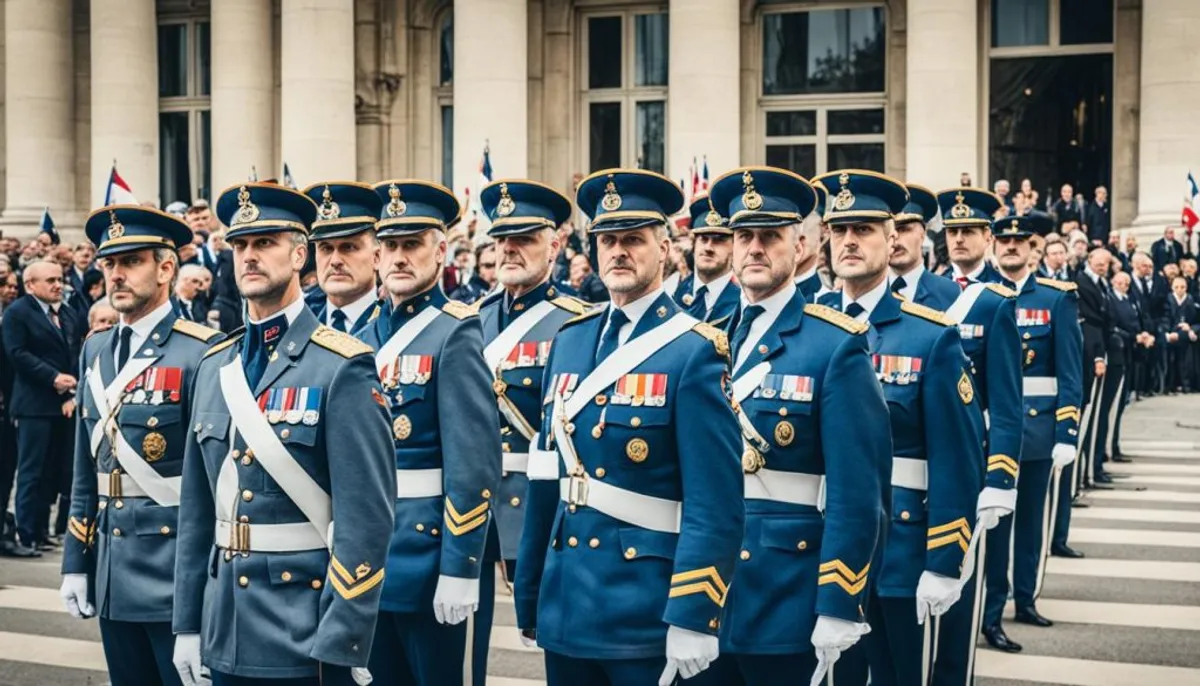
| Staff of the prefectural body | Number |
|---|---|
| Prefects | 124 |
| Sub-prefects | 479 |
| Women prefects | 15 |
| Total | 603 |
Main roles and missions of the prefect
The prefect maintains order and security in the department. He ensures tranquility during large gatherings. He is the head of the police, gendarmes, and firefighters.
Guardian of public order and security
Maintaining order is very important for the prefect. He is in charge during gatherings to ensure everything goes well. He leads the police and gendarmerie.
He also helps to prevent disasters. He plans to protect people from dangers. He supervises rescue operations and engages in crisis management.
Encouragement and stimulation of economic development
The prefect helps work and businesses to grow. He encourages the establishment of new companies. He supports activities that need assistance.
He also lends a hand in finding housing and jobs. He considers those who are less fortunate.
Relationship with local elected officials
The prefect works with elected officials, but their roles are different. The prefect implements government projects in the area. The elected officials make decisions without the prefect's advice in their region.
The prefect ensures that laws are followed everywhere. He helps everyone work together.
Powers and authority of the prefect
The prefect represents the Prime Minister and each of the ministers in the department. He implements national and community policies there. He ensures the execution of regulations and government decisions.
The prefect is the only high official whose powers have a constitutional basis. He is appointed by decree of the President of the Republic on the proposal of the Prime Minister and the Minister of the Interior.

Representative of the State in the department
The prefect represents the State in his jurisdiction and is the only one authorized to speak on behalf of the State. He ensures the legality control over all public services and organizations, as well as the administrative and budgetary acts of local authorities.
Implementation of national and community policies
The prefect's mission is to implement national and community policies in his department. He ensures the execution of regulations and government decisions in his territory.
What is a regional prefect?
A regional prefect is very important in France. He is the right hand of the State in his region. His job is to manage the State and European Union policies locally.
Role of the regional prefect
The regional prefect has many tasks to perform. He works on the major strategies of the State in his region. This concerns, for example, the economy, the environment, or education.
He ensures that everyone works well together in his region.
Authority over other department prefects
The regional prefect is the boss of the department prefects in his region. He can give them orders to ensure consistency in the region.
History of the prefectural function
The prefects began their work in 1800, thanks to Napoleon. They changed significantly due to decentralization. Before 1982, they led the departments for the State and managed power.
But the law of March 2, 1982 changed everything. It gave executive power to the presidents of councils. Thus, the prefects were assigned new missions, particularly regarding the feminization of the function.
Institution by Napoleon in 1800
In 1800, Napoleon established 97 prefectures. Each had a prefect to lead. This helped to better organize the country by representing the State locally.
Transformations by the decentralization of 1982
The decentralization of 1982 changed everything for the prefects. They lost executive power with the new law. Now, they are responsible for ensuring that laws and national policies are enforced locally.
Conclusion
The prefect is very important for France as a local leader. He helps maintain order, support the economy, and more. Established in 1800, prefects help the government enforce its laws throughout the country. They communicate with local leaders to solve problems.
In France, there are about 125 prefects and 456 sub-prefects. More and more women are joining their ranks. The laws of 2004 outline the powers they have. The recruitment of prefects is essential to ensure balanced representation. Each region and department has its own prefect, showing the government's presence throughout France.
In conclusion, the prefect is key to a strong public life in France. He connects the government with local people. Thanks to him, important government laws and projects reach us.