
In the heart of Kansai, between Osaka to the west and Nara to the south, lies Kyoto Prefecture. It stretches to the Sea of Japan. This is where you can find over 1,000 Buddhist temples and beautiful traditional gardens.
The city of Kyoto is famous for its historic district, Gion, and the Nijo Castle. It is visited as much as Tokyo. For over 1,000 years, it was the seat of imperial power. Today, its cultural heritage attracts many visitors.
Outside of Kyoto, the prefecture hides treasures. There are quiet villages, mountains, and the beautiful bay of Amanohashidate.
Main points to remember
- The Kyoto Prefecture is located in the heart of the Kansai region, in central Japan.
- Kyoto, the former imperial capital, is known for its numerous Buddhist temples, traditional gardens, and historical sites.
- The Kyoto Prefecture also offers remarkable natural scenery outside the city, such as the bay of Amanohashidate.
- Kyoto was the seat of imperial power for over 1,000 years, which has profoundly influenced its cultural heritage.
- The Kyoto Prefecture attracts many visitors from Japan and abroad each year due to its rich historical and architectural heritage.
Introduction to Kyoto Prefecture
The Kyoto Prefecture is located in the center of the Kansai region. It is east of Osaka and north of Nara. This region is very popular in Japan. It includes Kyoto, an ancient imperial capital.
Kyoto is famous for its cultural treasures. There are over 1,000 temples and beautiful traditional gardens. Local governance plays an important role in preserving these sites. The Gion district is also well-known for its history.
In this region, you can also discover beautiful natural landscapes. The bay of Amanohashidate is one example. It is a must-see destination.
Geographical situation of Kyoto Prefecture
Strategic location in the heart of Honshū Island
The Kyoto Prefecture is located in the center of Honshū Island. It is in the Kansai region of Japan. Its central location makes it a very important historical city.
Surrounded by mountains and bordered by Lake Biwa
Kyoto is framed by several mountains, including Mount Atago and Sajikiga-take. There is also Mount Hiei. To the east, you find Lake Biwa, the largest lake in Japan. This mountainous region offers beautiful views and many outdoor activities.
Kyoto, ancient imperial capital for a millennium
Transfer of the capital from Nara to Heian-kyō in 794
Kyoto was the center of Japan and the home of the emperor for over 1,000 years. In 794, the city of Nara passed the torch to Heian-kyō. This means "the capital of Peace and Tranquility," which later became Kyoto.
Historical core rich in cultural heritage
Today, Kyoto represents the past and culture of Japan. It is filled with temples, shrines, and historical treasures. This cultural heritage is a testament to the city's respect for its history through the ages. However, visitors sometimes face a registration certificate problem that can complicate their experience.
Iconic historical districts
Kyoto has many historical districts. Each showcases the architectural and political past of the ancient imperial capital.
The southern district and the Imperial Palace
The south of Kyoto is home to the Imperial Palace. It was the residence of Japanese emperors for over 1,000 years. This palace is truly a historical legacy of Kyoto.
The Muromachi district and the residences of the shoguns
To the east, Muromachi was the territory of the Ashikaga shoguns. The famous Kinkaku-ji, or Golden Pavilion, was one of their residences. It is an important place for these feudal lords.
Must-see architectural masterpieces
In Kyoto, you can find exceptional places. For example, the Kinkaku-ji Golden Pavilion was built by the shogun Ashikaga Yoshimitsu. Then, the Ginkaku-ji Silver Pavilion was erected by the shogun Ashikaga Yoshimasa. These buildings are pillars of traditional Japanese architecture. They are part of Kyoto's rich history.
The Kinkaku-ji Golden Pavilion
The Kinkaku-ji is the Golden Pavilion of Kyoto. It was built in the 14th century by a lake. Its golden shine reflects in the water, creating a beautiful landscape.
The Ginkaku-ji Silver Pavilion
On the other hand, the Ginkaku-ji was the idea of the shogun Ashikaga Yoshimasa in the 15th century. Even though it never had silver, its beauty is recognized by all. Its garden adds to its charm and ranks it among the most beautiful in Kyoto.
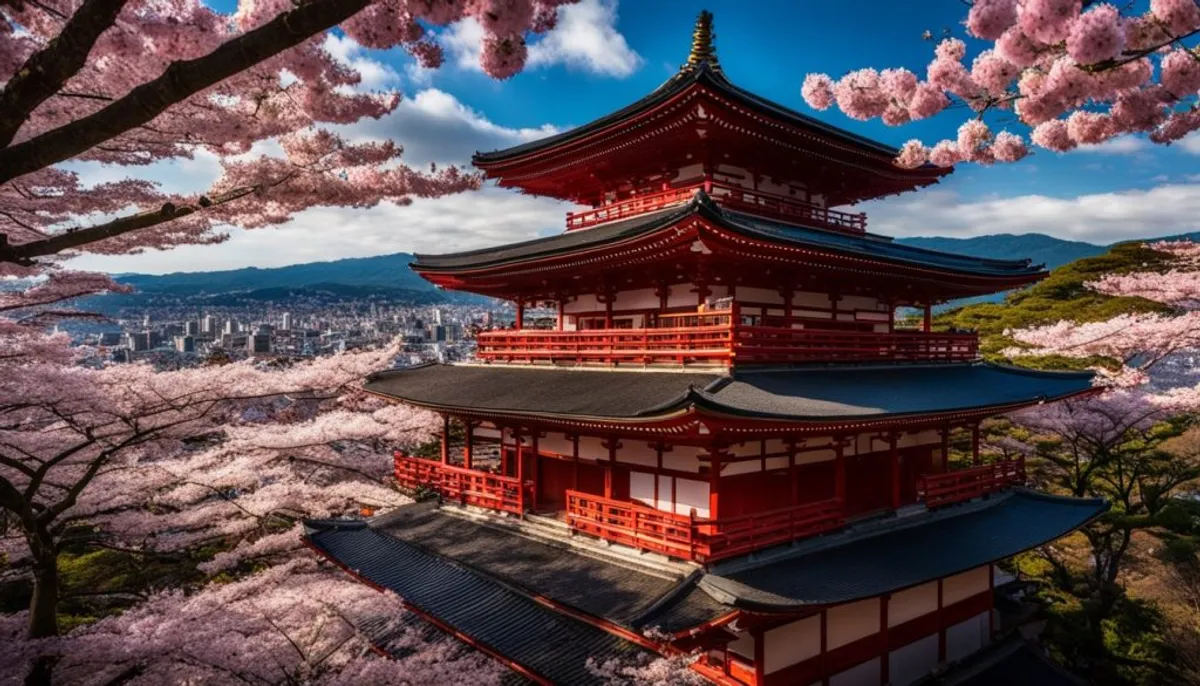
Exceptional religious heritage
Kyoto is rich in religious heritage, with ancient Buddhist temples and significant Shinto shrines. The famous Kiyomizu-dera and Fushimi Inari-taisha with its red torii gates are among the must-sees. These sites are essential to the history and soul of Kyoto.
Secular Buddhist temples
Japan has over 70,000 temples, each with its unique history. Kyoto is a treasure trove of secular Buddhist temples that tell its religious past. Some of these temples are even listed as World Heritage by UNESCO, showcasing their immense value.
Venerable Shinto shrines
The Shinto shrines are also part of Kyoto's religious history. Each shrine is dedicated to a deity, or kami, and has been honored for millennia. Besides Kyoto, other regions of Japan, such as Aichi and Tokyo, are rich in Shinto shrines.
Stunning traditional Japanese gardens
The Kyoto Prefecture is famous for its beautiful traditional Japanese gardens. These gardens are true works of art. They balance rocks, plants, and water harmoniously. This creates calm and beautiful places. Two of the most well-known are the Ginkaku-ji garden and the Kinkaku-ji garden.
There are also other incredible gardens in Kyoto. For example, there is the Kenroku-en garden in Kanazawa, inspired by beauty and tranquility. The Koraku-en in Okayama, which opened in 1884, is a beautiful example of these landscapes.
Outside the city, Kyoto has more treasures to offer. Like the Kairaku-en garden in Mito, famous for its flowering plum trees in spring. Or the Katsura villa, with a splendid garden. These places are true jewels of the history of landscape art in Japan.
| Major traditional gardens | Location | Features |
|---|---|---|
| Ginkaku-ji | Kyoto | Garden of the Silver Pavilion |
| Kinkaku-ji | Kyoto | Garden of the Golden Pavilion |
| Kenroku-en | Kanazawa | Garden inspired by fundamental Japanese aspects |
| Koraku-en | Okayama | Landscape garden opened to the public in 1884 |
| Kairaku-en | Mito | Famous for its thousands of flowering plum trees |
| Katsura villa garden | Kyoto | Superb landscape garden of an imperial residence |
These traditional gardens of Kyoto are jewels of Japanese landscape art. They reveal all the beauty and refinement of Japanese garden culture. It is a must to visit them if you go to the region.
Major cultural festivals and events
In Kyoto, there are many festivals and events throughout the year. The most famous is the Gion festival. It takes place in July. It attracts people from Japan and around the world.
The famous Gion festival in July
The Gion festival has existed since the 6th century. It is one of the most important in Kyoto. Each year, it celebrates culture and Japanese traditions with a grand procession and celebrations.
The Aoi Matsuri and the Jidai Matsuri
In Kyoto, there is also the Aoi Matsuri in May and the Jidai Matsuri in October. The Aoi Matsuri honors the city and its history. The Jidai Matsuri focuses on the different ages of Japan's history.
Marked climate and seasonal changes
The climate of Kyoto is humid subtropical, often changing. Winters are cool, sometimes snowy. Summers, on the other hand, are hot and humid. In spring, the cherry blossoms make Kyoto a magical place. In autumn, the landscapes are adorned with color. Visitors love to see these seasonal changes. If you have concerns or questions, you can make prefectural inquiries to get answers.
Cool winters and spring cherry blossoms
Winter in Kyoto is cold and sometimes snowy. But it’s not all gray: the city comes alive with festivals and cultural events. Nabe is a hot dish very popular during these months. People enjoy sharing it. The tea ceremony, with its matcha, offers a moment of peace and harmony.
Hot and humid summers, vibrant autumns
From December to February, the weather often changes in Kyoto. Historical places take on a new appearance. In December, the Arashiyama Hanatoro light festival illuminates the city. Onsens provide a way to relax in winter, in breathtaking natural settings.
Access and transportation in Kyoto Prefecture
The Kyoto Prefecture has very good transportation options. It is perfect for visiting this rich region of Japan. The Shinkansen, the famous bullet train, goes from Kyoto to Tokyo and everywhere else in the country. Kyoto is also well connected by a local rail network for easy sightseeing.
Access by Shinkansen and local rail network
The Shinkansen is ideal for quickly traveling between Kyoto and neighboring major cities, such as Tokyo. This bullet train is very comfortable and safe. Additionally, there is a local rail network that makes getting around the city very convenient. It is operated by companies like JR, Hankyu, Keihan, or Kintetsu. This network serves many important neighborhoods and sites in Kyoto, but there are also factors influencing delays that can affect trips.
Buses for getting around Kyoto city
Within Kyoto, buses are the main means of transportation. They cover many neighborhoods and attractions. Travelers can easily see the city's heritage wonders. This is thanks to the well-developed municipal bus network.
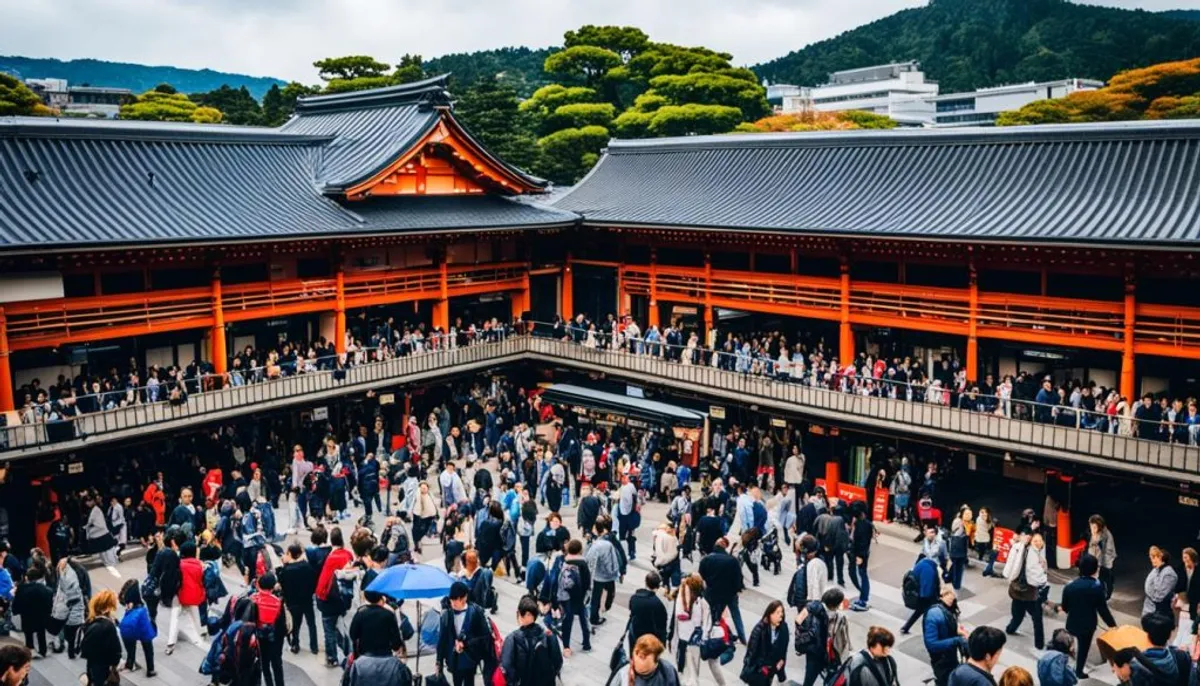
Thus, whether you choose the Shinkansen, the local train, or the city buses, Kyoto is well connected. These transportation options help discover the cultural treasures of the region easily.
Craftsmanship and traditional know-how
Kyoto is well known for its traditional crafts, especially textiles. It is the historic capital of kimono. The Nishijin district is the heart of the traditional textile industry in Japan. Many local businesses create unique kimonos and fabrics.
Historic capital of kimono
For centuries, Kyoto has been the premier place to create kimonos. Local artisans master the art of weaving, dyeing, and embroidery. Their expertise has made the city famous for its traditional craftsmanship.
Nishijin district, cradle of textiles
The Nishijin district is located northwest of central Kyoto. It is the crucial place for the textile industry in Japan. Today, it is still filled with small businesses. They specialize in creating kimonos and other exceptional fabrics.
Kyoto Prefecture, high-tech economic heart
While Kyoto is known for its cultural heritage, it is also a major high-tech center. Companies like Nintendo and Kyocera have their headquarters here. The role of the prefect in Ariège is also crucial in managing these dynamics. However, traditional crafts, such as kimono production, are losing momentum against technology.
Headquarters of major electronic companies
Many renowned electronic companies have chosen Kyoto as their headquarters. They are transforming Kyoto into a key place for the Japanese economy.
Gradual decline of traditional industries
At the same time, crafts like kimono making are seeing their success diminish. This is happening due to the progress of the high-tech sectors. This shows the economic shift in Kyoto. It is important to adapt while preserving its rich cultural heritage.
Kyoto Prefecture, a major tourist destination
Kyoto Prefecture is a major stopping point for travel enthusiasts. It is rich in cultural and historical heritage. Its main attraction is cultural and heritage tourism, which charms national and international visitors every year. The prefectures of Japan, including Kyoto, offer a diversity of landscapes and traditions that enrich the travel experience.
Importance of cultural and heritage tourism
Kyoto is globally famous for sites like the Imperial Palace. It has over 1,600 Buddhist temples and 250 Shinto shrines. Each of these places offers a unique dive into traditional Japanese architecture and local customs.
Influx of Japanese and foreign visitors
Popular places in Kyoto include the Kinkaku-ji and Ginkaku-ji temples. There is also the famous Fushimi Inari Taisha shrine with its vermilion torii tunnel. Nijo Castle, a World Heritage site of UNESCO, attracts architecture enthusiasts.
Urban evolution and modern integration
Kyoto has preserved its rich past while embracing modernity. In 2005, the city expanded to include the town of Keihoku. This provided new spaces for urbanization and an updated legal status for the area.
Extension of Kyoto's boundaries in 2005
This expansion brought Kyoto to include new areas. It has managed to keep its historical heart while broadening its territory. Thus, Kyoto successfully combines tradition and modernity.
Coexistence of the traditional and the modern
Today, Kyoto perfectly blends tradition and modernity. This is evident in the association of its ancient sites with current developments. This harmony helps the city stay true to its identity while progressing in urban planning.
Conclusion
Kyoto Prefecture is the historical and cultural cradle of Japan. With its ancient capital, it is home to many temples, shrines, and traditional gardens. It is famous for its rich heritage, attracting many visitors. Kyoto perfectly combines its past and modernity.
Thanks to its history and special atmosphere, Kyoto Prefecture welcomes a third of the Japanese population each year. Places like the Imperial Palace and Kinkaku-ji impress tourists. They come to see this treasure of Japanese heritage, like Fushimi Inari-taisha.
Today, Kyoto blends its glorious past with the present. This city combines centuries of traditions with the latest discoveries. That is why it is a special destination, where culture and tourism offer a unique experience to everyone.
FAQ
Where is Kyoto Prefecture located?
Kyoto Prefecture is in the center of Kansai, between Osaka and Nara. It is a region that stretches to the Sea of Japan.
What are the main cultural assets of Kyoto?
Kyoto has over 1,000 temples, traditional gardens, Gion, and Nijo Castle. For over 1,000 years, Kyoto has been the capital of Japan. This has made it the cultural and historical heart of the country.
What are the iconic districts of Kyoto?
Kyoto has several historical districts. Among them are the southern district with the Imperial Palace and Muromachi. The latter includes the former residences of the Ashikaga shoguns.
What are the main architectural masterpieces of Kyoto?
In Kyoto, you can find architectural wonders, such as the Kinkaku-ji Golden Pavilion and the Ginkaku-ji Silver Pavilion. They are famous for their traditional Japanese architecture.
What are the main cultural events in Kyoto?
Kyoto has important cultural events. There is the Gion festival in July, the Aoi Matsuri in May, and the Jidai Matsuri in October.
What is the climate like in Kyoto?
The climate of Kyoto is humid subtropical, with very distinct seasons. Winters are cool, but summers are hot and humid. Spring and autumn are very pleasant.
What are the means of transportation to get around Kyoto Prefecture?
To get around Kyoto, there is the Shinkansen that connects major cities. You can also use the rail network to visit the sites. Within Kyoto, many people take the bus.
What are the traditional crafts of Kyoto?
Kyoto is known for its artisanal traditions, especially in textiles. It is the historic heart of the kimono. The Nishijin district is famous for its Japanese fabrics.
What is the economic role of Kyoto Prefecture?
Kyoto is not only rich in culture. It is also an important technological center with major electronic companies. Nevertheless, traditional crafts, such as kimono making, are declining.
Why is Kyoto a major tourist destination?
Due to its history and culture, Kyoto attracts many visitors, both Japanese and foreign. Cultural tourism is very important there. Sites like the Imperial Palace and the temples are must-sees.