
Bouaké is located in Côte d’Ivoire, precisely in the Bandama Valley region. It is at the heart of the Gbêkè region. This city is very important for the country. It has a large population and many economic activities.
Key Points to Remember
- Bouaké is a city located in the Bandama Valley region in Côte d’Ivoire
- It is the main sub-prefecture of the Bouaké department, in the Gbêkè region
- Bouaké is one of the most populous and economically important cities in the country
- The city plays a strategic role in Ivorian territorial administration
- Its development is linked to its geographical position and diverse economic activities
Introduction
Bouaké is an important city in Côte d’Ivoire. It is the capital of the Bouaké department. It is also the main sub-prefecture in the Gbêkè region. Thus, it plays a key role in the organization of Ivorian territory. This introduction discusses the location and role of Bouaké.
The city is situated in the heart of the country. It is located 350 km north of Abidjan. With nearly 929,000 inhabitants in 2014, Bouaké is the second most populous city after the economic capital. Various ethnic groups, including the Baoulé, Malinké, Sénoufo, and Dioula, live there.
Bouaké is an important sub-prefecture in the Gbêkè region. It connects the department with local municipalities. This administrative function places it at the heart of the region, where official correspondence is essential for communication.
In terms of economy, Bouaké relies on agriculture, industry, and trade. It is a major agricultural center with crops like coffee, cocoa, and cotton. The industry includes numerous factories and processing units. Additionally, the city is an important trading hub with markets and business centers.
This introduction has presented Bouaké in a general way. It has highlighted its territorial role, population, and dynamic economy. The following sections will explore other aspects of this city in Côte d’Ivoire.
Geographical Situation of Bouaké
Bouaké is located in the center of Côte d’Ivoire, in the Gbêkè region. At 350 km north of Abidjan, the economic capital, the city is in the middle of the region.
Location in the Gbêkè Region
The city is the heart of the Gbêkè administrative region. It is one of the 31 regions of Côte d’Ivoire. Its centrality helps organize and govern this part of the country.
Geographical Coordinates
Bouaké is located at coordinates 7°44′N 5°03′W. The Bandama River runs through it. This promotes its economic development and makes it vital for the region.
Historical Overview of Bouaké
In the early 20th century, Bouaké started small. But quickly, it became a key place in Côte d’Ivoire. This is due to its important position on the map and its actions in agriculture and industry. Now, it is the second largest city in the country, after Abidjan.
The history of Bouaké is a story of growth. This growth has made the city an essential hub in the country.
Administrative Division of Bouaké
Bouaké is not an autonomous administrative entity, despite its importance. It is divided into several municipalities, neighborhoods, and villages. This division shows the importance of Bouaké as a sub-prefecture.
Municipalities
Bouaké includes municipalities like Bouaké, Bounda, and Brobo. It also includes Djebonoua and Mamini. These places are crucial for the administration of the city. They connect neighborhoods and villages to the higher level.
Neighborhoods
In each municipality, Bouaké has many neighborhoods. These are the foundations of its urban organization. Each neighborhood has a diverse population. This shows the city's diversity.
Villages
In Bouaké, there are also villages. Each village has its own identity and governance. They help preserve the cultural heritage of the region.
What is the sub-prefecture of Bouaké
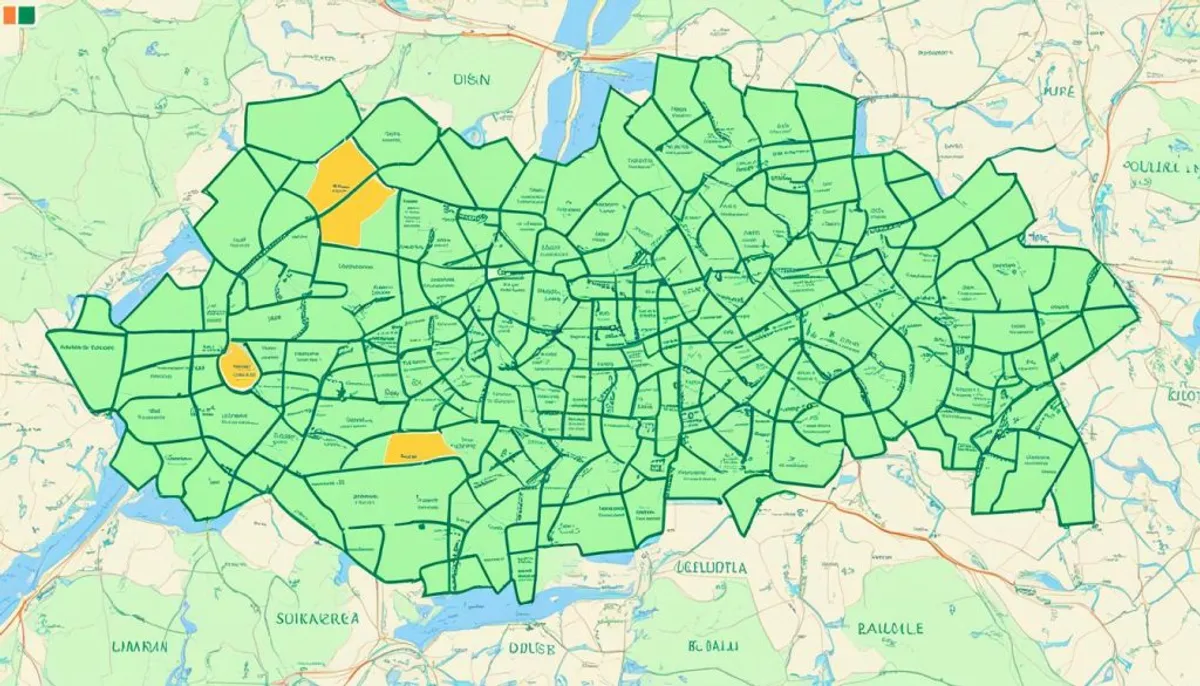
From 2011 to 2014, the Bouaké region in Côte d’Ivoire was modified. Bouaké became the main sub-prefecture of the Bouaké department. This is located in the Gbêkè region. As a sub-prefecture, Bouaké has great importance. It connects the departmental level with smaller places, like municipalities and villages. This connection is essential for managing the Gbêkè region.
Bouaké thus plays a central role in the region. It serves as a point of contact between different administrative levels. This helps in the organization and smooth functioning of the Gbêkè region.
| Administrative Division | Key Figures |
|---|---|
| Sub-prefectures | 509 |
| Villages | 8,000 |
| Municipalities | 201 |
Demographics of Bouaké
Bouaké is the second largest city in Côte d’Ivoire. It has about 929,000 inhabitants, according to the 2014 census. The agglomeration, which includes other areas, reaches 1.5 million inhabitants. This means there are 711 people per square kilometer over an area of 1,170 square kilometers.
Population
The population figures in Bouaké were closely examined in 2014. This census lasted two months, employing 30,000 people. Among them, 23,104 were census agents. They used smartphones and digital aids to speed up their work. For residents, the residence permit process is essential for regularizing their status.
Only the number of permanent residents was recorded, not visitors. This helped to have a clear view of Bouaké and its surroundings. We do this to assist leaders, urban planners, and researchers. Thus, they can track how the population evolves in the Gbêkè region, of which Bouaké is the center.
Ethnic Groups
Bouaké is rich in its variety of ethnicities, including the Baoulé, Malinké, Sénoufo, and Dioula. This diversity highlights its major role in the economy and administration of the country.
Economy of Bouaké
At the heart of Côte d’Ivoire, Bouaké stands out for its dynamic economy. The city is driven by three major sectors:
first, agriculture, which thrives on coffee, cocoa, and cotton.
The weather and local rivers greatly assist these industries in growing. Industrially, it is strong due to its factories and processing of tobacco, seeds, and cashew nuts.
Agriculture
Bouaké is an important center for agricultural production, especially for crops like coffee, cocoa, and cotton.
The city benefits from favorable climatic conditions and a developed hydrographic network, conducive to the development of these agricultural activities.
Industry
The industrial sector is equally crucial. It is marked by the presence of several factories and processing of local products.
Among others, there is cigarette manufacturing and the work of cashew trees. This greatly contributes to the region's economy.
Trade
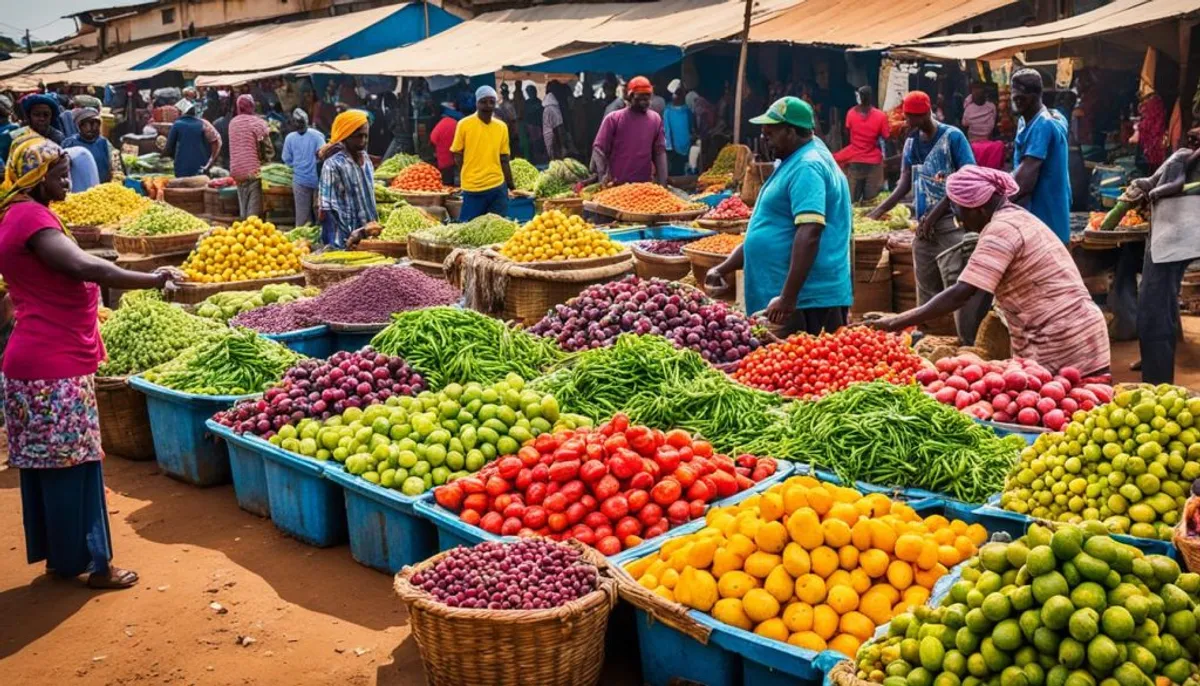
That's not all. Bouaké is a vital center for trade with its numerous markets and business centers.
It is located at the crossroads of major trade routes. This allows it to play an important role in regional and national trade.
Infrastructure and Services in Bouaké
Bouaké has much to offer in terms of infrastructure and services. This meets the needs of a growing population. The city has a good transportation system with an airport and roadways. Education is also important, with many schools. The health system is strong, with several hospitals.
Transportation
Thanks to its varied network, Bouaké is well connected. Its international airport links the city to the world. The roads, including highways, facilitate travel. And the railway connection links Bouaké to other cities.
Education
The education sector is developed in Bouaké. There are 862 primary and nursery schools, and 27 high schools. The city also offers 11 technical and vocational institutions. This ensures varied training.
Health
The health system in Bouaké is well-equipped. There are 14 urban health centers and more. These establishments cover the medical needs of the region. For certain administrative processes, it is necessary to fill out a prefecture form.
| Indicator | Value |
|---|---|
| Number of primary and nursery schools | 862 |
| Number of general high schools | 27 |
| Number of technical and vocational institutions | 11 |
| Number of urban health centers | 14 |
| Number of school and university health services | 3 |
| Number of rural health centers | 18 |
These infrastructures make Bouaké a major regional hub. They allow the population to access quality services.
Culture and Tourist Attractions
Bouaké shines with its rich cultural heritage. The city has much to offer in terms of tourist attractions. It showcases local culture and history. There are historical sites like the Palace of the Baoulé Kings. This highlights its key role as the capital of the Baoulé people. The city also has museums. They display the traditions and crafts of the locals.
Historical Sites
The Palace of the Baoulé Kings is a major historical site in Bouaké. It was the seat of power for the Baoulé kings for centuries. Its traditional architecture speaks volumes about the local history and culture. Other important places can also be visited, such as the fortifications of Samory Touré or the Royal Court. They help to understand the city's rich past.
Museums
Bouaké is not lacking in museums that showcase its culture and craftsmanship. The Museum of Civilizations of Côte d’Ivoire exhibits traditional objects. It shows the cultural diversity of the region. Other museums, like the Museum of Arts and Popular Traditions, educate about the traditions of the Baoulé.
Cultural Events
Bouaké is lively throughout the year. It hosts major cultural events that attract people from everywhere. The Baoulé Arts and Culture Festival is very important. It honors the traditions, dance, and music of the Baoulé people. The Bouaké Carnival is another event that showcases its diverse culture.
Administration and Politics of Bouaké
Bouaké is a sub-prefecture with a team that manages the city. This team works with state leaders. It is led by the Prefect. There are also mayors and local chiefs. These political leaders are important at the national level.
The city of Bouaké is central to politics. It is the center of activities for political parties and public agencies. These places help to govern the country.
The administration and politics of Bouaké encourage its development. Teams work together. They aim to achieve goals for the good of the city.
| Administrative Entity | Role and Responsibilities |
|---|---|
| Prefecture | Represents the State and coordinates the action of public services at the sub-prefecture level |
| Municipalities | Manage the city's affairs and provide local services to residents |
| Neighborhood and village chiefs | Ensure the link between the administration and local communities, relaying citizens' concerns |
In Bouaké, the administration and local politics are united. This helps the city to develop. It offers better living opportunities to its residents. Bouaké is also becoming more attractive to newcomers.
Famous Personalities from Bouaké
Bouaké has produced global stars. They come from politics, arts, sports, and business. Among them are former Ivorian Prime Minister Daniel Kablan Duncan, painter Gnoléba Koné, and former international footballer Didier Drogba. All hail from Bouaké. Thanks to these individuals, Bouaké has become a globally recognized name.
| Name | Field of Activity | Achievements |
|---|---|---|
| Daniel Kablan Duncan | Politics | Former Prime Minister of Côte d’Ivoire, prominent political figure |
| Gnoléba Koné | Arts | Painter recognized for his works representing the Baoulé culture of Bouaké |
| Didier Drogba | Sport | Former Ivorian international footballer, emblematic figure of African football |
These celebrities from Bouaké have changed the course of history. Their success has put Bouaké on the global map. Each, in their field, has had a significant influence.
Challenges and Development Perspectives
Bouaké is a dynamic city in Côte d’Ivoire. It faces several challenges for its future. Notably, rapid urbanization, the simple exit of its youth from the city, poverty, and road management. The rapid population growth makes urban planning and service distribution difficult. Migrations, whether internal or external, also affect Bouaké's evolution.
However, Bouaké has major assets to move forward. Its geographical position, growing economy, and attractiveness attract investors. Local and national leaders are working to improve infrastructure and diversify the economy. They also aim to enhance the well-being of residents. These actions are part of a broader plan to develop all of Côte d’Ivoire, including Gbêkè.
Looking to the future, Bouaké has great projects. It wants to better manage urbanization, boost sectors like agriculture and industry, and improve public services. With its many strengths, the city aspires to become a major development hub. This would be good for it, of course, but also for all of Côte d’Ivoire.
Conclusion
Bouaké is an important city in Côte d’Ivoire. It is at the center of its region, Gbêkè. This city has challenges but also assets for growth. These assets help it to develop further and to be more influential at the national level.
It is a very active city economically. It is also rich in culture. Its position is very strategic in Côte d’Ivoire. With almost 929,000 inhabitants, Bouaké is the most populous city in its region. It is recognized throughout the country.
Bouaké has good chances of progress. Local and national authorities are working hard to improve the city. They seek to strengthen roads, diversify the economy, and enhance the lives of residents. Thus, Bouaké can continue to grow. It will confirm its important role in the region, in Côte d’Ivoire.
FAQ
What is the sub-prefecture of Bouaké?
From 2011 to 2014, Bouaké became the main sub-prefecture of the Bouaké department. This department is located in the Gbêkè region, where territorial administration plays a key role in local management.
Where is Bouaké geographically located?
Bouaké is located in the center of Côte d’Ivoire, in the Gbêkè region. It is about 350 km north of Abidjan. The geographical coordinates are 7°44′N 5°03′W.
What are the main municipalities of Bouaké?
The main municipalities include Bouaké, Bounda, Brobo, Djebonoua, and Mamini. The city has many neighborhoods and villages, and it also offers online prefecture services.
What is the administrative role of Bouaké?
Bouaké is an essential sub-prefecture for local administration. It connects the departmental level with local municipalities, neighborhoods, and villages.
What is the demographics of Bouaké?
Bouaké is the second largest city in Côte d’Ivoire. It has nearly 929,000 inhabitants, according to the 2014 census. It is home to diverse ethnic groups such as the Baoulé and Malinké.
What are the main economic activities of Bouaké?
Agriculture, industry, and trade are the pillars of Bouaké's economy. The city excels in coffee, cocoa, and cotton.
What are the main tourist attractions in Bouaké?
Bouaké has a rich cultural heritage. There are historical sites and museums about local culture. The city also hosts cultural events throughout the year.
Who are the famous personalities from Bouaké?
Bouaké has produced several celebrities. Among them are former Prime Minister Daniel Kablan Duncan and painter Gnoléba Koné. Don't forget former footballer Didier Drogba.